
Quick answer: Pipes can start freezing when outdoor temperatures drop to 20°F or below for an extended period, and exposed pipes in unheated spaces can freeze at temperatures above 20°F. To prevent it, keep your thermostat at 55°F or higher, drip faucets, open sink cabinets, and insulate or heat-tape exposed pipes. If a pipe freezes, open the faucet and thaw it with gentle heat, never an open flame.
On this page:
At what temperature pipes freeze
How long it takes pipes to freeze
Why pipes burst
Which pipes freeze first
Prevention checklist
Keeping pipes safe without heat
Vacation settings
Signs your pipes are frozen
What to do right now
When to call a plumber
Massachusetts cold snaps
FAQs
When a cold snap hits Massachusetts, the forecast can turn into a real threat to your plumbing fast. A pipe that freezes overnight can split, and you may not know it until the ice thaws and water starts pouring into a wall or ceiling.
This guide explains the temperatures that put your pipes at risk, how to keep them from freezing, and what to do if they already have. If you have no water or a pipe has burst, Nicholson handles frozen pipe repair 24/7 across MetroWest Massachusetts. Call 508-301-1767.
At What Temperature Do Pipes Freeze?
Pipes are most likely to freeze when outdoor temperatures fall to 20°F or below for a prolonged period. Water freezes at 32°F, but the air around a pipe has to stay cold long enough to pull the heat out of the water first. According to Texas A&M AgriLife Extension, pipes can freeze and burst when the outside temperature reaches 20°F or below.
Warmer temperatures don't mean your pipes are safe. Consumer Reports notes that uninsulated pipes in uninsulated spaces can freeze above 20°F. Use this table to gauge your risk:
Outdoor temperature | Pipes in unheated or exterior-wall spaces | Pipes in heated living space |
Above 32°F | Very low risk | Very low risk |
21–32°F | Low near 32°F, rising as temperature drops; uninsulated, exposed pipes can freeze | Low risk |
20°F or below | High risk | Low risk if heat stays at 55°F or higher |
Any freezing temperature + heat or power outage | High risk | High risk |
What's the Minimum Temperature to Keep Pipes From Freezing?
Keep your thermostat at 55°F or higher, day and night, during cold weather. The American Red Cross and IBHS both recommend at least 55°F. That protects your living space, but pipes in a garage, crawl space, attic, or exterior wall can still freeze because warm air doesn't reach them.
When Should You Worry About Pipes Freezing?
Worry when the forecast calls for 20°F or lower overnight, especially if you have plumbing in exterior walls, a crawl space, or a garage, or a pipe that has frozen before.
Does Wind Chill Make Pipes Freeze?
No. Wind chill can't cool a pipe below the actual air temperature. According to the National Weather Service, the only effect wind chill has on objects such as water pipes is to shorten the time it takes them to cool. If it's 25°F with a 5°F wind chill, your pipes are dealing with 25°F.
Wind still matters: it pushes cold air through gaps onto pipes, so sealing drafts helps.
How Long Does It Take for Pipes to Freeze?
Pipes are at risk after prolonged or extended exposure to temperatures at or below 20°F. There's no single countdown, because timing depends on where the pipe runs, how well it's insulated, whether drafts reach it, and whether water is moving through it. If temperatures have been in the teens overnight and a faucet slows to a trickle, assume a pipe is starting to freeze.
Why Do Pipes Burst When They Freeze?
Most people assume expanding ice simply pushes a pipe apart, but research from the University of Illinois Building Research Council found otherwise. Ice first forms a blockage. As more ice grows, it squeezes the water trapped between the blockage and a closed faucet, and that pressure splits the pipe.
Which Pipes Are Most Likely to Freeze?
Pipes freeze first where cold air reaches them:
Outdoor faucets (hose bibs or sillcocks)
Pipes in exterior walls and under sinks on outside walls
Pipes in crawl spaces, attics, and attached garages
Basement pipes near rim joists and foundation openings
If your home is older, check your outdoor faucets. IBHS notes that homes built before 2010 typically lack frost-proof outdoor faucets.
How to Keep Pipes From Freezing: A Prevention Checklist
The best way to keep pipes from freezing is to keep warm air around them and cold air away from them.
Before Winter
Disconnect hoses, then shut off and drain outdoor faucets using the indoor shutoff valve that feeds each one.
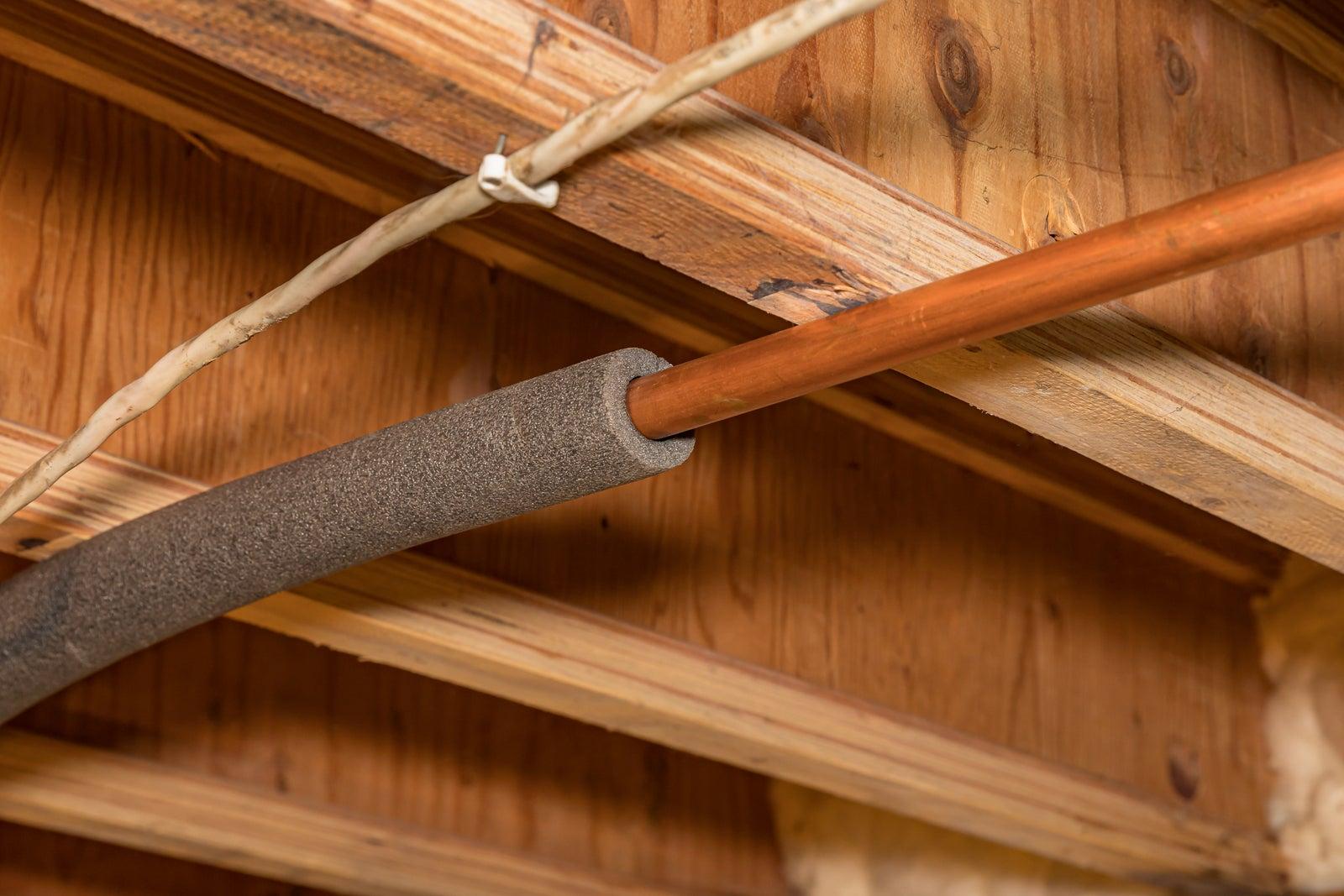
Insulate exposed pipes in basements, crawl spaces, garages, and attics with foam pipe sleeves, leaving no gaps.
Seal drafts where pipes, wires, and vents pass through exterior walls.
Find your main water shutoff valve and make sure it turns.
Schedule a heating tune-up. A furnace or boiler that fails in a cold snap is one of the fastest ways to end up with frozen pipes.
During a Cold Snap
Let indoor faucets drip, especially kitchen and bathroom sinks on exterior walls, to keep water moving and relieve pressure.
Open sink cabinets so warm air reaches the pipes. Move cleaning products out of reach of kids and pets.
Keep the thermostat steady day and night.
Keep the garage door closed if water lines run through it.
Heat Tape for Pipes: What to Know
Heat tape, also called heat cable, is an electric cable that runs along a pipe and warms it so the water inside can't freeze. It's useful for hard-to-heat lines in crawl spaces and garages. To use it safely:
Choose a UL-listed, thermostat-controlled product rated for your pipe material.
Plug it into a GFCI outlet, which cuts power if it detects a fault. A licensed electrician can install GFCI outlets.
Follow the manufacturer's instructions on overlapping and insulation.
Inspect it every fall. The U.S. Consumer Product Safety Commission advises unplugging it and checking its full length for cracked or charred insulation.
How to Prevent Frozen Pipes in a Crawl Space
Close or cover foundation vents for the winter, weatherstrip the crawl space door or hatch, seal gaps where pipes enter, and insulate every exposed pipe with no gaps. Add heat tape to lines that still get too cold.
How Do You Keep Pipes From Freezing Without Heat?
If your power or heat goes out during a freeze, keep doors and windows closed, keep faucets dripping, and wrap exposed pipes in towels or blankets. If the outage will last, shut off the main water valve and open faucets at the highest and lowest points of the house to drain the lines. Never heat your home with a gas stove, and never use a generator, camp stove, or charcoal grill indoors, as the Red Cross warns in its carbon monoxide guidance for power outages.
A furnace or boiler failure in a cold snap is an emergency. Nicholson provides 24/7 emergency heating service and heating repair across MetroWest Massachusetts.
What Temperature Should You Leave Your House at on Vacation?
Leave your heat set to 55°F or higher while you're away, the minimum the Red Cross and Consumer Reports recommend. Open sink cabinets on exterior walls, ask someone to check the house daily, and consider a smart thermostat that alerts you if the temperature drops.
Will Shutting Off the Water Keep Pipes From Freezing?
Not by itself. Water already in the pipes can still freeze, but shutting off the main valve limits damage if a pipe bursts. For a long absence, turn off the water and drain the plumbing, and keep the heat on.
Warning for homes with boilers: Don't shut off your main water without talking to a heating professional first. Many boilers refill automatically from the home's water supply. With the supply off, a slow leak can leave the boiler low on water, and the Minnesota Department of Labor and Industry warns that a low-water condition can overheat a boiler and even cause it to explode. Even if a safety control shuts the boiler down, your home loses heat and your pipes are unprotected. Call Nicholson at 508-301-1767 before you leave.
How Can You Tell If Your Pipes Are Frozen?
The clearest sign of a frozen pipe is a faucet that produces only a trickle, or nothing at all, in freezing weather. Other signs include frost on an exposed pipe, a bulging section, a toilet that won't refill, and odd smells from a drain.
If only one fixture is affected, the freeze is probably in the pipe that feeds it. If no faucet has water, the freeze may be at the main line or water meter. Call your water utility about a frozen meter; don't try to thaw it yourself.
Frozen Pipes: What to Do Right Now
If you think a pipe is frozen, act before it bursts:
Open the faucet the frozen pipe feeds to relieve pressure.
Find the frozen section, usually along an exterior wall, in a cabinet, or where the water line enters the house.
Apply gentle heat, working from the faucet back toward the frozen spot.
Keep heating until full water pressure returns, then check the pipe for leaks.
Check every other faucet. If one pipe froze, others may have too.
Safe Ways to Thaw a Frozen Pipe
The Red Cross recommends a hair dryer, an electric heating pad, a portable space heater kept away from flammables, or towels soaked in hot water. Never use a blowtorch, kerosene or propane heater, or any open flame. If the frozen section is inside a wall or you can't reach it, turn up the heat and call a plumber.
What to Do If a Frozen Pipe Bursts
Shut off the main water valve immediately.
Turn off electricity to the area if water is near outlets or wiring, and only if you can do it without standing in water.
Photograph the damage for your insurance claim.
Call a licensed plumber.
Have a frozen or burst pipe? Nicholson provides 24/7 emergency plumbing service across MetroWest Massachusetts, with no extra fee for emergencies, evenings, or weekends, and we're guaranteed to arrive on time. Call 508-301-1767.
When Should You Call a Plumber for Frozen Pipes?
Call a plumber if you can't find or reach the frozen section, the pipe is inside a wall or ceiling, the pipe is bulging or has burst, no faucet has water, or thawing doesn't restore full pressure.
Nicholson's licensed plumbers handle frozen pipe repair in Framingham, Natick, Ashland, Holliston, Hopkinton, Sudbury, Marlborough, Westborough, and surrounding MetroWest towns, including water line repair when damage reaches the line into your home.
Why Do Pipes Freeze So Often in Massachusetts?
Massachusetts cold snaps regularly push temperatures well below 20°F, often dropping into negative temperatures. One night below zero is enough to freeze unprotected pipes. For a full checklist to help you get ready for cold weather, see how to prepare your Massachusetts home for winter.
Why Choose Nicholson for Frozen Pipe Repair
Nicholson Plumbing, Electrical, Heating, and Air Conditioning has been serving Massachusetts homeowners for decades. We're your 24/7 whole-home comfort specialists, with thousands of five-star Google reviews.
We offer same-day service with no extra fee for emergency, evening, or weekend calls, and we're guaranteed to arrive on time. We're licensed in Massachusetts (MA P.L. #4626-C, MA G.F. #316-C, MA S.M. #883-B, MA E.L. #8517-A1), and a Comfort360 membership, which includes two tune-ups a year.
Call 508-301-1767 or visit us at 71 Whitney St., Holliston, MA 01746.
Areas we serve: Framingham · Natick · Ashland · Holliston · Hopkinton · Sudbury · Marlborough · Westborough
Frozen Pipe FAQs
Can pipes freeze at 32 or 33 degrees?
It's very unlikely. Water freezes at 32°F, and wind can't cool a pipe below the air temperature. At 32–33°F, only exposed pipes left in the cold for an extended period are at risk. Most frozen pipes happen at 20°F or below.
Will shutting off the water keep pipes from freezing?
No. Water in the pipes can still freeze, though shutting off the main valve limits damage if a pipe bursts. In a home with a boiler, talk to a heating professional first.
Can I use a hair dryer to thaw frozen pipes?
Yes, the Red Cross recommends it. Open the faucet, then move the dryer along the pipe, starting near the faucet. Keep it away from standing water.
Will frozen pipes thaw on their own?
Yes, once temperatures rise, but waiting is risky. A crack may not show until water flows again, often inside a wall. It's safer to thaw the pipe with gentle heat and check for leaks.
Does homeowners insurance cover frozen pipes?
Many policies cover sudden water damage from a burst pipe, but coverage may be limited if the home was left unheated. Review your policy before winter.
Who do I call for frozen pipes in MetroWest Massachusetts?
Call a licensed plumber. Nicholson repairs frozen and burst pipes 24/7 across Framingham, Natick, Holliston, Hopkinton, Marlborough, and surrounding towns, with no extra fee for emergency, evening, or weekend service. Call 508-301-1767.
Related Articles
What do you need help with today?
Heating
No heat, strange smells, rising bills? We repair and replace heating systems to keep your home reliably warm.
Air Conditioning
AC blowing warm air? Uneven cooling in your rooms? We fix cooling issues fast and keep your system running smoothly all summer.
Plumbing
Our highly trained plumbers handle it all, from leaky faucets to full system installations and repipes.
Electrical
The smartest team in town. You need repair, installations, wiring, inspections, lighting — you name it.